A Sweet Glimpse at This Charming Scottish Fold Kitten
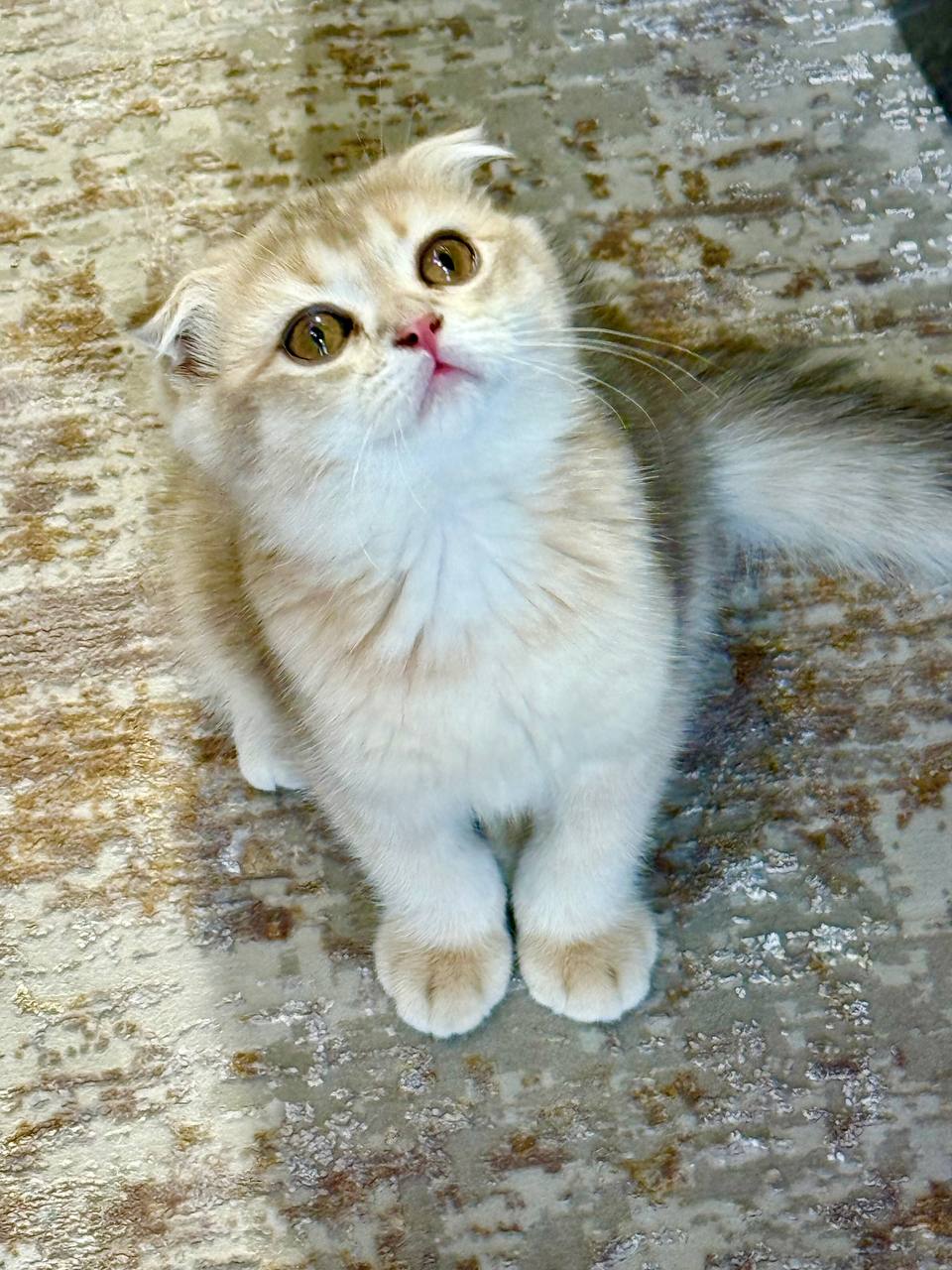
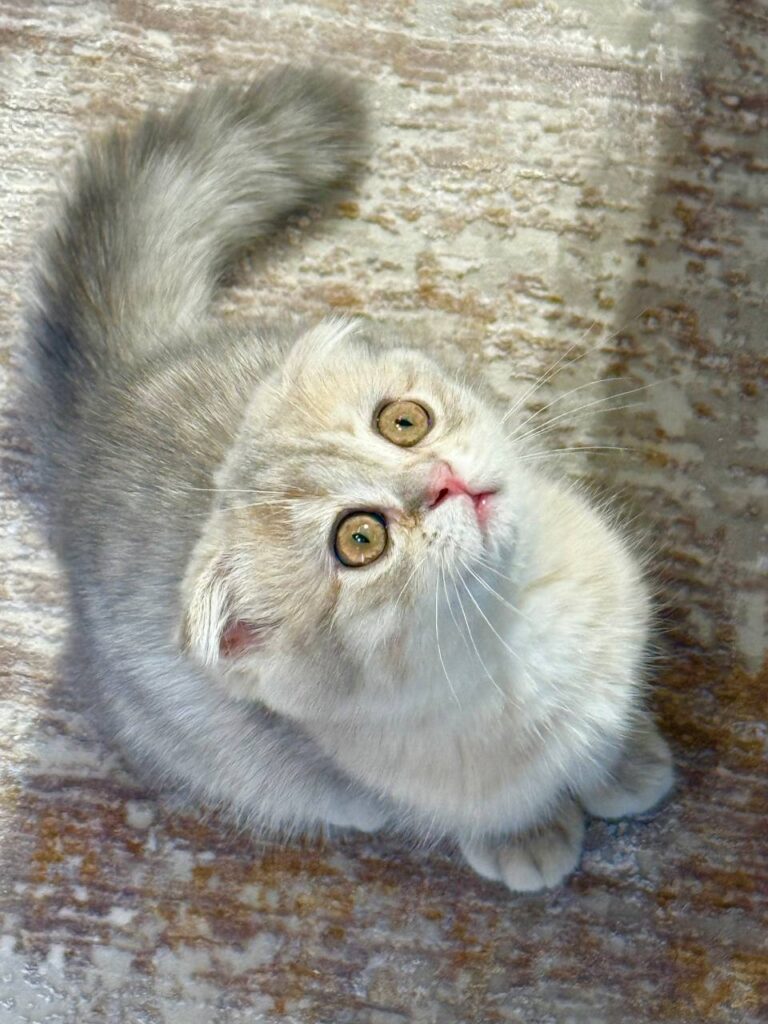
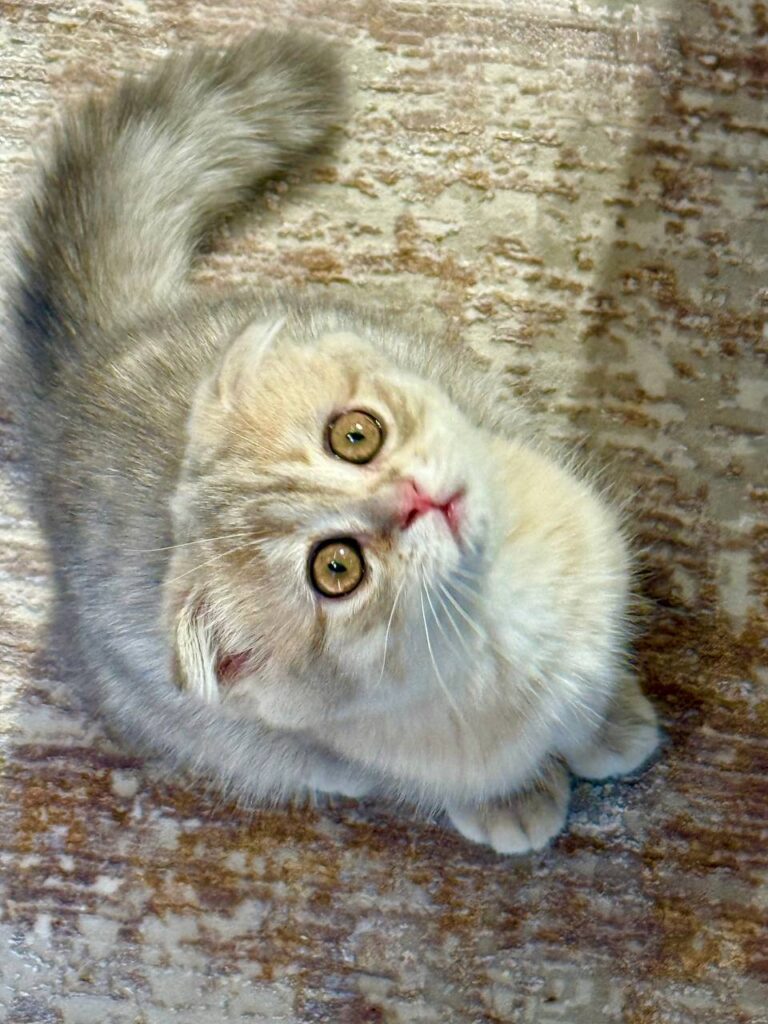
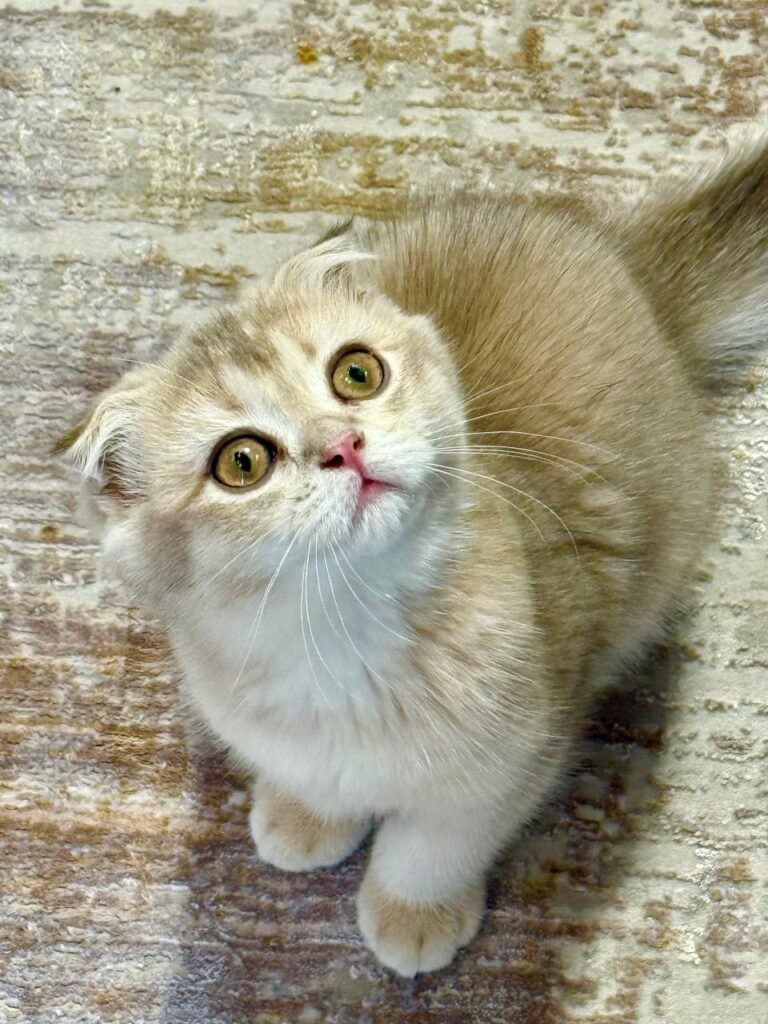
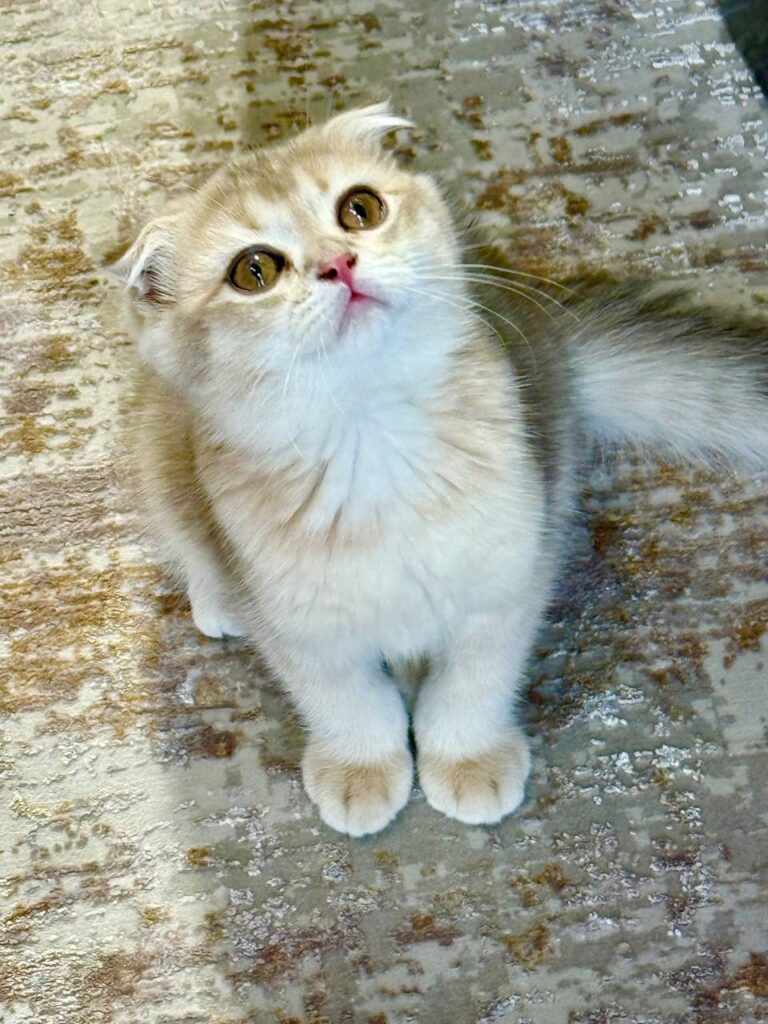
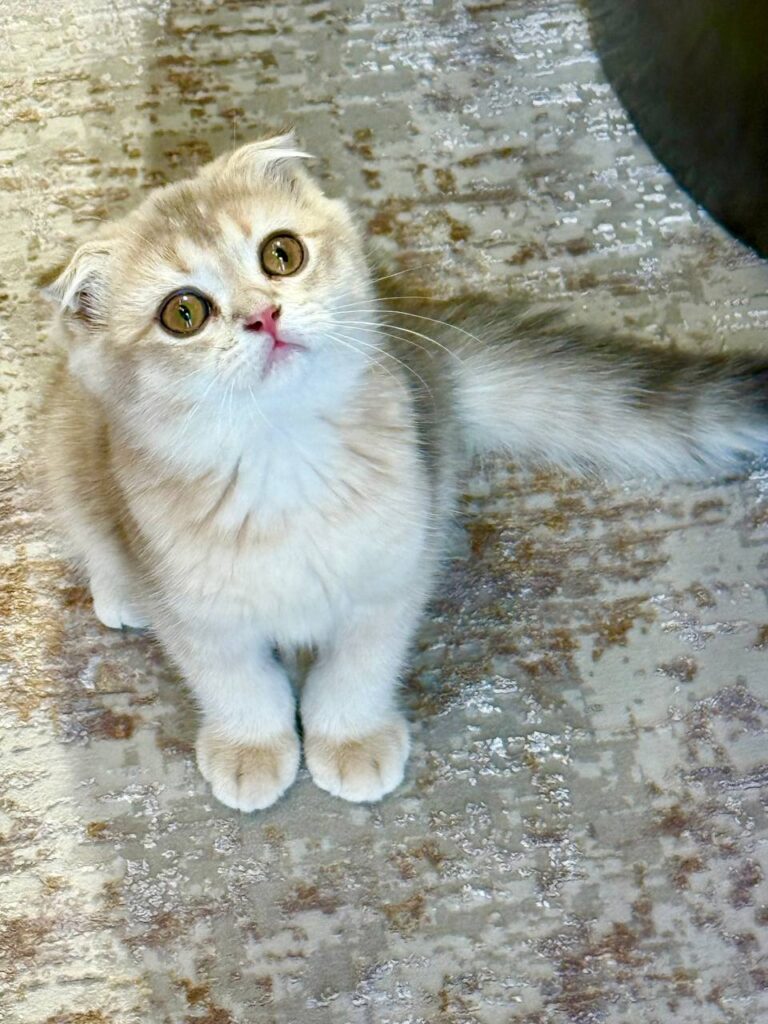
Sitting attentively with his velvety tail curled to the side and his large, glowing amber eyes locked upward, this beautiful Scottish Fold boy looks as if he stepped out of a storybook. With his soft cream and beige fur and signature folded ears, he is a picture of innocence, curiosity, and quiet elegance. These unique traits make him a shining example of his breed—gentle, affectionate, and irresistibly charming.
The Signature Look of the Scottish Fold
The most distinctive feature of the Scottish Fold breed is their ears, which fold forward and downward, giving the head a rounded, owl-like appearance. This trait is due to a natural mutation affecting cartilage development. Though not all kittens born from Scottish Fold parents will have folded ears, the ones who do often begin showing the fold within the first few weeks of life. Combined with their wide eyes, short nose, and plush coat, the breed exudes a look that’s both unique and heart-melting.
Calm, Curious, and Clever
This kitten already displays the personality traits that make the Scottish Fold a favorite among cat lovers. Known for their quiet, affectionate nature, these cats prefer peaceful surroundings and close companionship. They often become deeply bonded to one or two members of the household and will quietly follow them around, curling up nearby or watching intently from a comfortable perch. While not overly vocal, Scottish Folds have a soft, sweet voice and often communicate through gentle meows and trills. Their curious but calm demeanor makes them well-suited to indoor life and harmonious in both small apartments and large homes.
Health Considerations and Breed-Specific Needs
Like other Scottish Folds, this kitten may carry the genetic mutation that causes not just the folded ears, but also affects cartilage and bone development throughout the body. This can lead to a condition called osteochondrodysplasia, which causes joint pain or stiffness, especially in the tail, legs, and spine. For this reason, it’s essential to handle your kitten gently and schedule regular veterinary checkups as he grows. Ethical breeders avoid mating two folded-ear cats to reduce the chance of serious joint-related health issues, and responsible care after adoption is equally important in supporting long-term wellness.
Feeding for Growth and Joint Health
A balanced, nutrient-rich diet is especially important for Scottish Fold kittens. High-quality kitten food should provide essential proteins, healthy fats, and vitamins to support strong muscles, joint health, and brain development. While he may have a healthy appetite, portion control is important to avoid overfeeding, since excess weight can put strain on developing joints. Always provide access to fresh water, and consider integrating small, healthy treats during training or bonding sessions.
Grooming the Gentle Way
Although this kitten’s coat appears plush and thick, Scottish Folds are typically low-maintenance when it comes to grooming. A gentle brushing once or twice a week will help reduce shedding and keep his coat clean and smooth. Start grooming early so he grows accustomed to the routine—it can become a relaxing ritual for both of you. Due to their folded ears, it’s especially important to check for buildup or wax inside the ears, which can sometimes occur more easily than in straight-eared breeds. Clean with a vet-recommended ear solution if needed, and always avoid inserting anything deep into the ear canal.
Playful but Low-Impact Exercise
Even though Scottish Folds are not the most energetic breed, they do enjoy playful interaction. This kitten will benefit from gentle playtime sessions that stimulate his mind and body. Use feather wands, soft toys, or laser pointers to encourage safe movement. Avoid overly high or demanding climbing structures, especially during his early development, to protect his joints from strain. Offering a cozy perch by a window or a soft tunnel to explore can be just as satisfying as more intense physical activity.
Litter Habits and Clean Spaces
Your Scottish Fold kitten will likely adapt easily to litter training. This breed is generally fastidious and prefers clean, quiet spaces. Choose a low-entry litter box that’s easy on his joints and place it in a low-traffic area. Scoop the box daily to maintain cleanliness, and ensure that the litter type is soft under his paws. His quiet demeanor means he may not always signal distress loudly, so watch for subtle changes in behavior around the box, which could indicate discomfort.
Vet Visits and Early Monitoring
During the first year, it’s crucial to schedule routine vet visits for vaccinations, deworming, and physical exams. Your veterinarian will monitor joint flexibility and tail movement to ensure healthy skeletal development. If he shows reluctance to jump, changes in walking posture, or tail stiffness, early intervention can help manage discomfort. Discuss spaying or neutering timelines with your vet, usually recommended around five to six months of age.
A Companion Full of Heart
Beneath his delicate features and soft coat lies a kitten full of warmth and affection. The Scottish Fold thrives on human companionship and often seeks out connection without being overly demanding. He may settle beside you while you work, rest quietly near your feet, or curl into your lap when you’re relaxing. His loyalty and gentleness make him an ideal pet for those looking for a calm yet emotionally rich relationship with their cat.
Conclusion: A Lifelong Friend in a Little Body
This little Scottish Fold boy is more than just a pretty face. With proper care, thoughtful attention, and lots of love, he will grow into a cat full of grace, tenderness, and quiet charm. His folded ears and soulful gaze are just the beginning of a personality that will deepen and blossom as he bonds with you. Whether you choose to name him after something sweet, classic, or quirky, he’s sure to wear it with pride.