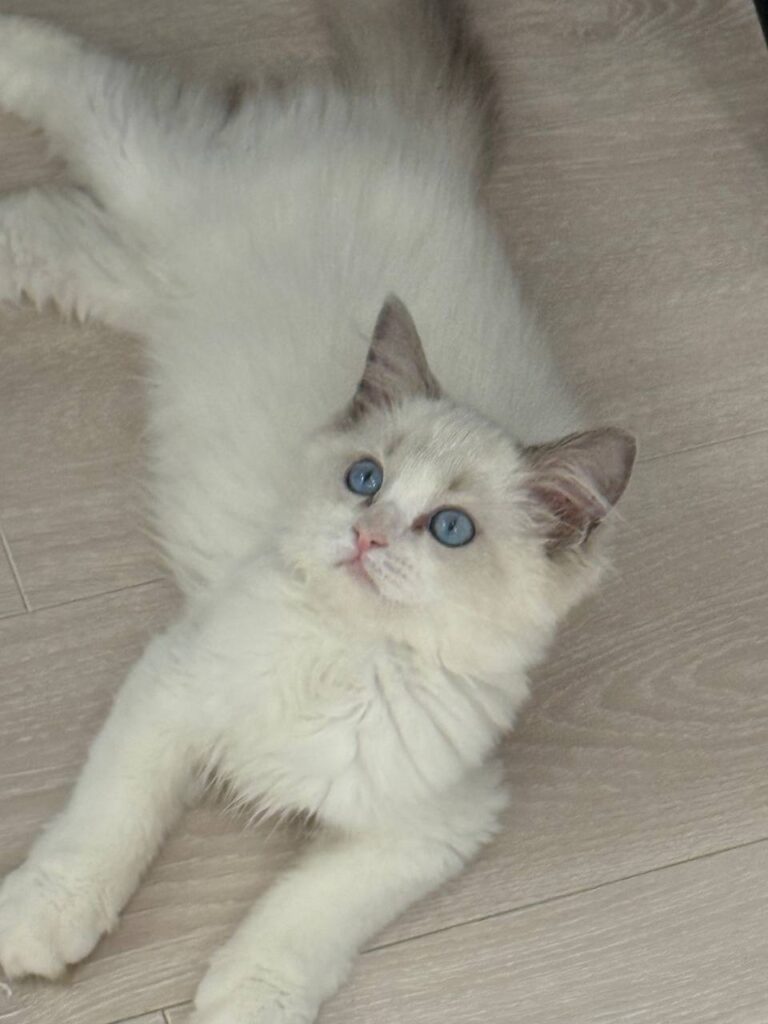
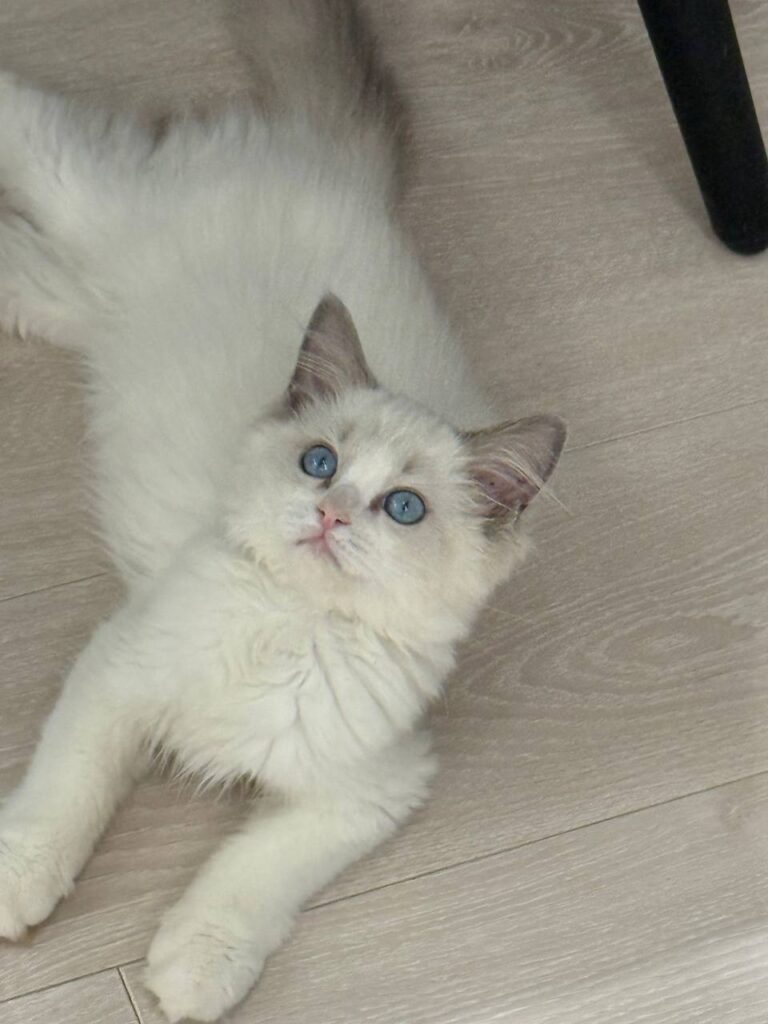
A Heavenly Glimpse of This Beautiful Ragdoll Kitten
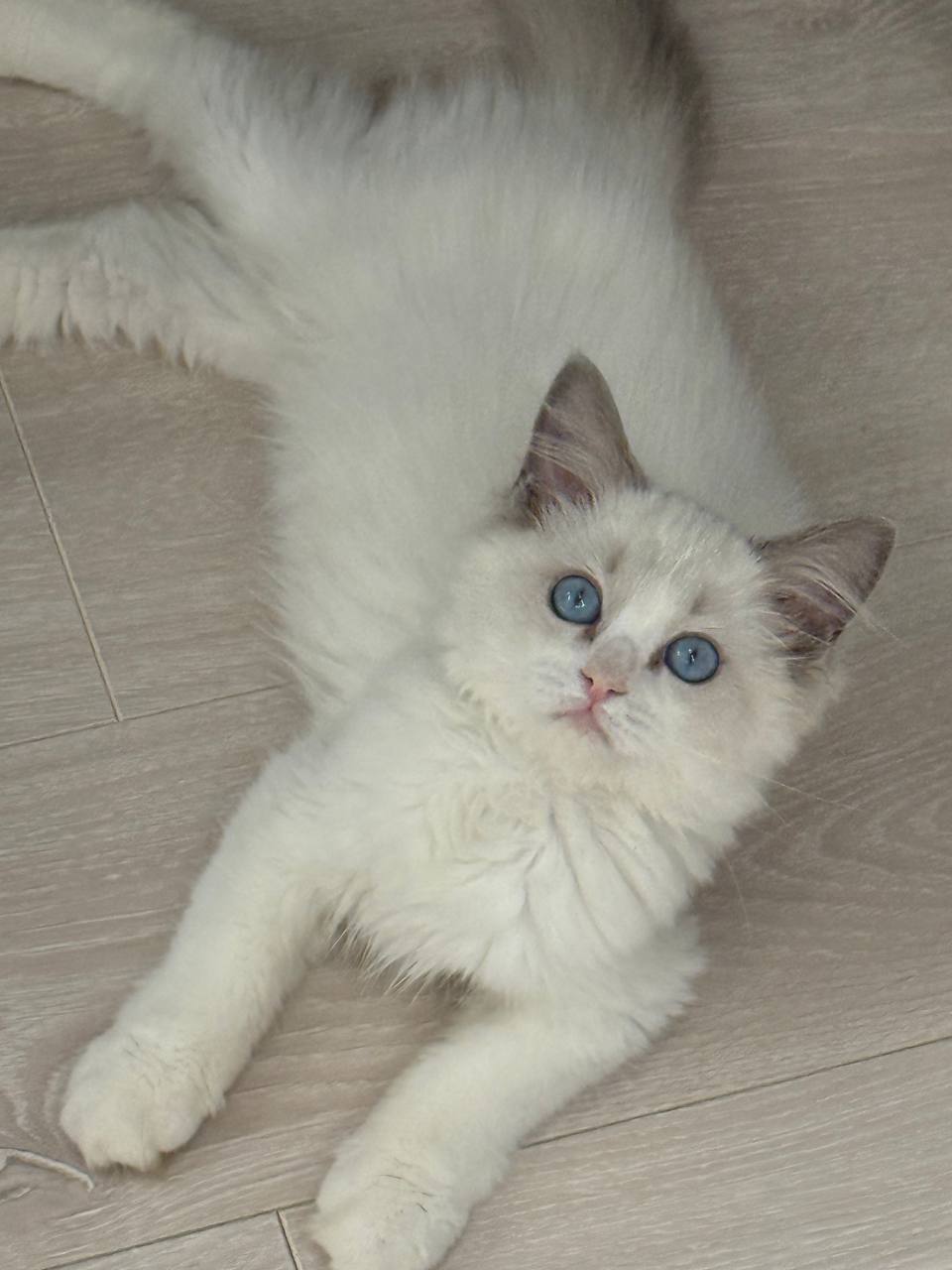
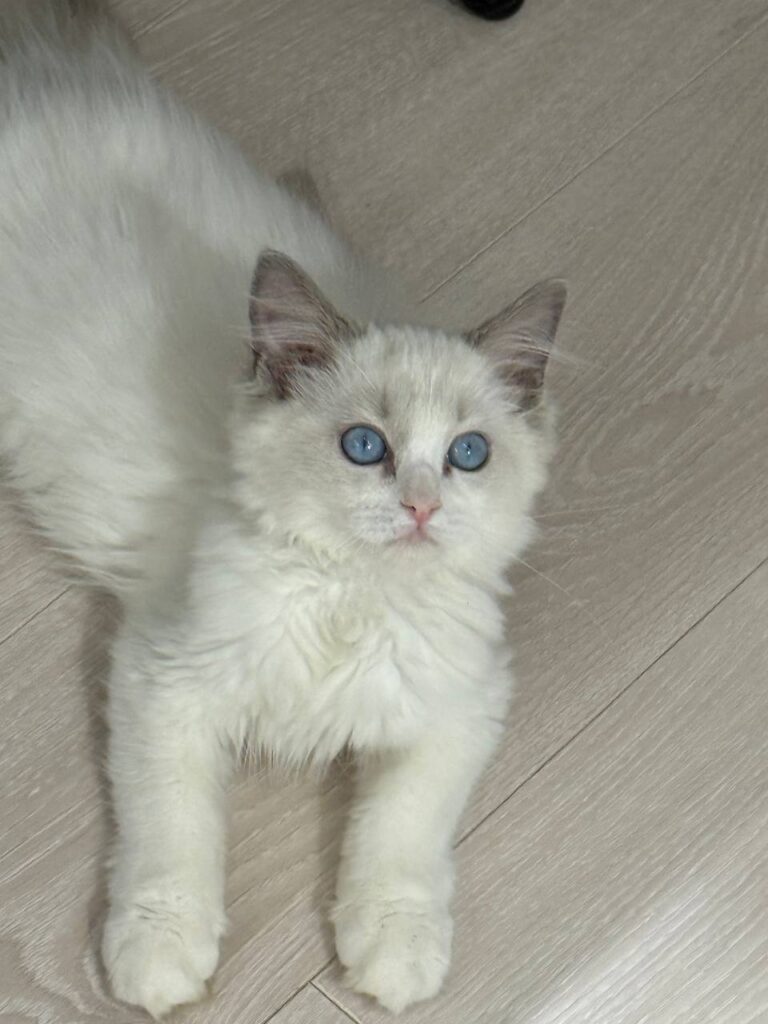
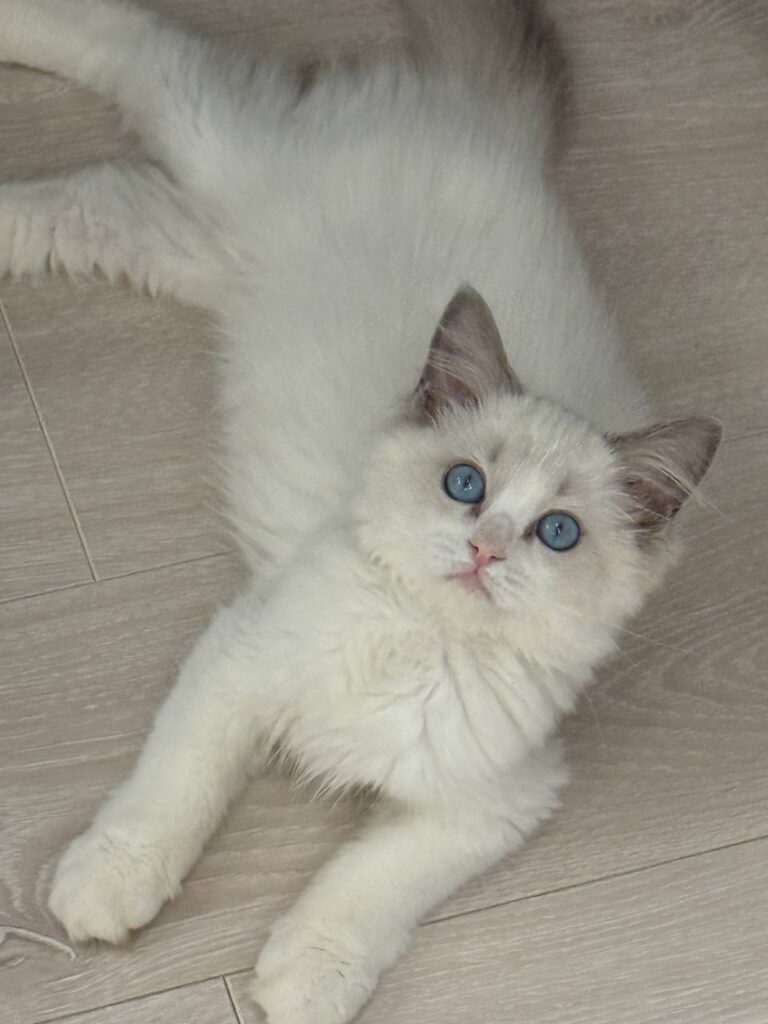
Lying gracefully on the floor with his vivid blue eyes and luxurious fur, this adorable Ragdoll kitten looks like a little cloud come to life. His soft expression, relaxed body, and gentle gaze embody everything that cat lovers admire about this breed. With his sweet nature and cuddly presence, he’s a feline companion destined to bring peace and affection to any home lucky enough to have him.
The Signature Appearance of the Ragdoll
The Ragdoll is known for its striking blue eyes, semi-long silky coat, and gentle features. This kitten’s soft fur, pale cream body, and darker points on the ears and tail are classic characteristics of the breed. Named for their tendency to go limp when picked up, like a ragdoll toy, these cats are famous for their laid-back nature and floppy cuddles. Their coat may appear high-maintenance, but it’s actually less prone to matting than many other long-haired breeds due to its fine texture.
A Calm and Affectionate Temperament
From kittenhood, the Ragdoll is known for being one of the most docile and affectionate cat breeds. These kittens are incredibly people-oriented, often following their owners from room to room, curling up beside them, and seeking attention in the gentlest way. Unlike more independent breeds, Ragdolls thrive on human interaction and often behave more like puppies than cats. They are typically calm, gentle, and tolerant, making them ideal for families, singles, and even first-time cat owners. You’ll often find them lounging peacefully or flopping onto their side, inviting you in for a cuddle.
Health and Breed-Specific Considerations
Ragdoll cats are generally healthy, but like all breeds, they have a few conditions to be aware of. Hypertrophic cardiomyopathy (HCM), a form of heart disease, is the most common genetic condition affecting the breed. Reputable breeders screen for this, but it’s still important to monitor heart health with regular vet visits. This kitten should be examined routinely as he grows, with early checks for weight management, dental health, and overall wellness. Due to their calm nature, Ragdolls are sometimes less active than other cats, so encouraging play and movement is important for long-term health.
Feeding and Nutrition for Growth
To support his development, this Ragdoll kitten needs a balanced diet rich in protein and essential nutrients. Choose a high-quality kitten food designed for growth and energy. Since Ragdolls are a large breed and can grow slowly over several years, nutrition remains important well into adulthood. Provide measured meals to avoid overfeeding, especially since they can become lazy if not encouraged to play. Fresh water should always be available, and treats should be given in moderation.
Grooming for a Soft and Healthy Coat
Despite their long fur, Ragdoll cats have coats that are surprisingly low-maintenance. This kitten should be brushed two to three times a week with a soft slicker brush to prevent tangles, reduce shedding, and keep the coat smooth. Start grooming early to make it a pleasant experience, rewarding him with gentle praise or a treat. Pay attention to areas under the legs and behind the ears, where knots are most likely to form. Unlike some long-haired breeds, Ragdolls rarely develop severe mats if cared for regularly.
Play and Enrichment for a Gentle Soul
Even though they’re laid-back, Ragdoll kittens still benefit from playtime and enrichment. This kitten will enjoy interactive toys like feather wands, plush mice, or puzzle feeders that engage his curiosity. Provide soft climbing furniture or low-level platforms where he can jump safely and observe his surroundings. Ragdolls aren’t as likely to climb curtains or dash around wildly, but they still need activity to stay healthy and entertained. Soft play sessions are often followed by long, blissful naps.
Litter Training and Cleanliness
Like most intelligent breeds, the Ragdoll takes to litter training easily. He will appreciate a clean, spacious litter box placed in a quiet area of the house. Use unscented, soft litter to suit his delicate paws, and scoop the box daily to maintain hygiene. Some Ragdolls may be particular about cleanliness, so regular maintenance ensures good habits and a happy cat.
Vet Care and Early Development
During kittenhood, this Ragdoll boy will need routine veterinary visits for vaccinations, parasite control, and overall health monitoring. His growth rate should be tracked closely, as he may continue growing into his large frame for up to four years. Discuss the right time for neutering with your vet, usually around six months of age. Keep an eye out for signs of lethargy or changes in appetite, though most Ragdolls are incredibly resilient and easygoing by nature.
A True Companion in Every Sense
What sets the Ragdoll apart is not just its beauty, but its bond with humans. This kitten will likely grow into a cat that waits by the door when you come home, sleeps near your feet, and meets your gaze with full trust. His calm presence and affectionate personality make him not only a pet but a lifelong friend. If you’re seeking a cat who loves to be held, enjoys your company, and is content simply being near you, then this boy is the perfect match.
Final Thoughts
This lovely Ragdoll kitten is more than just a pretty face with striking blue eyes. He is a loyal, gentle, and affectionate companion who will thrive in a loving home. With proper care, enrichment, and lots of attention, he’ll reward you with years of devoted companionship.