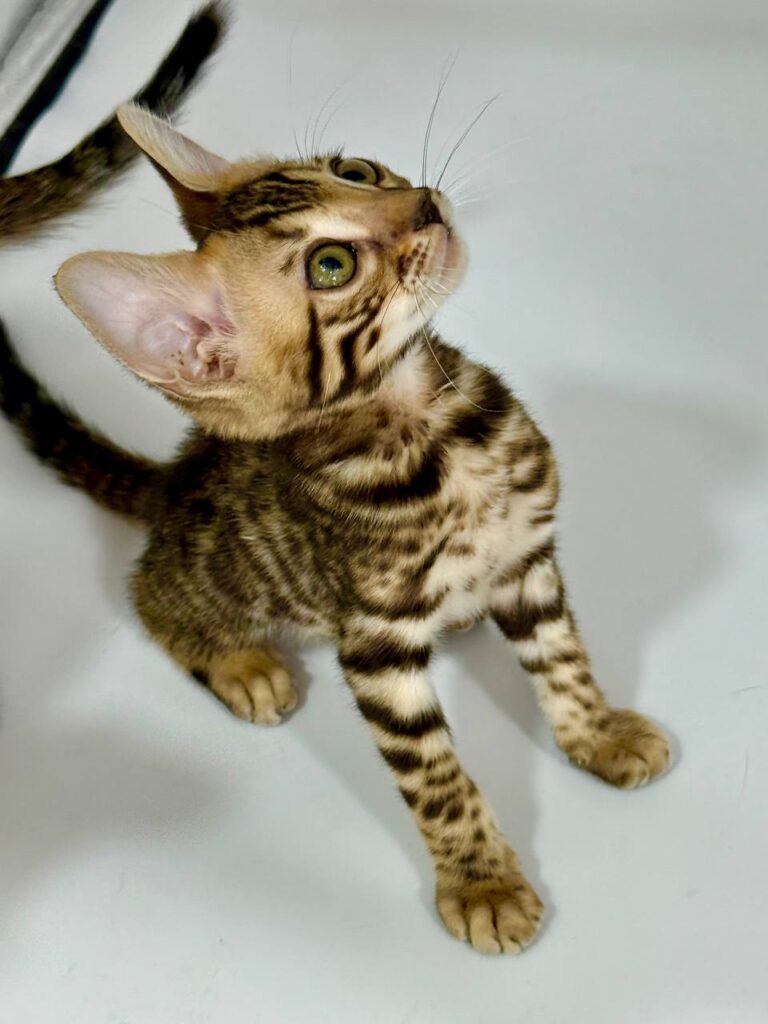
Meet the Majestic Bengal Kitten
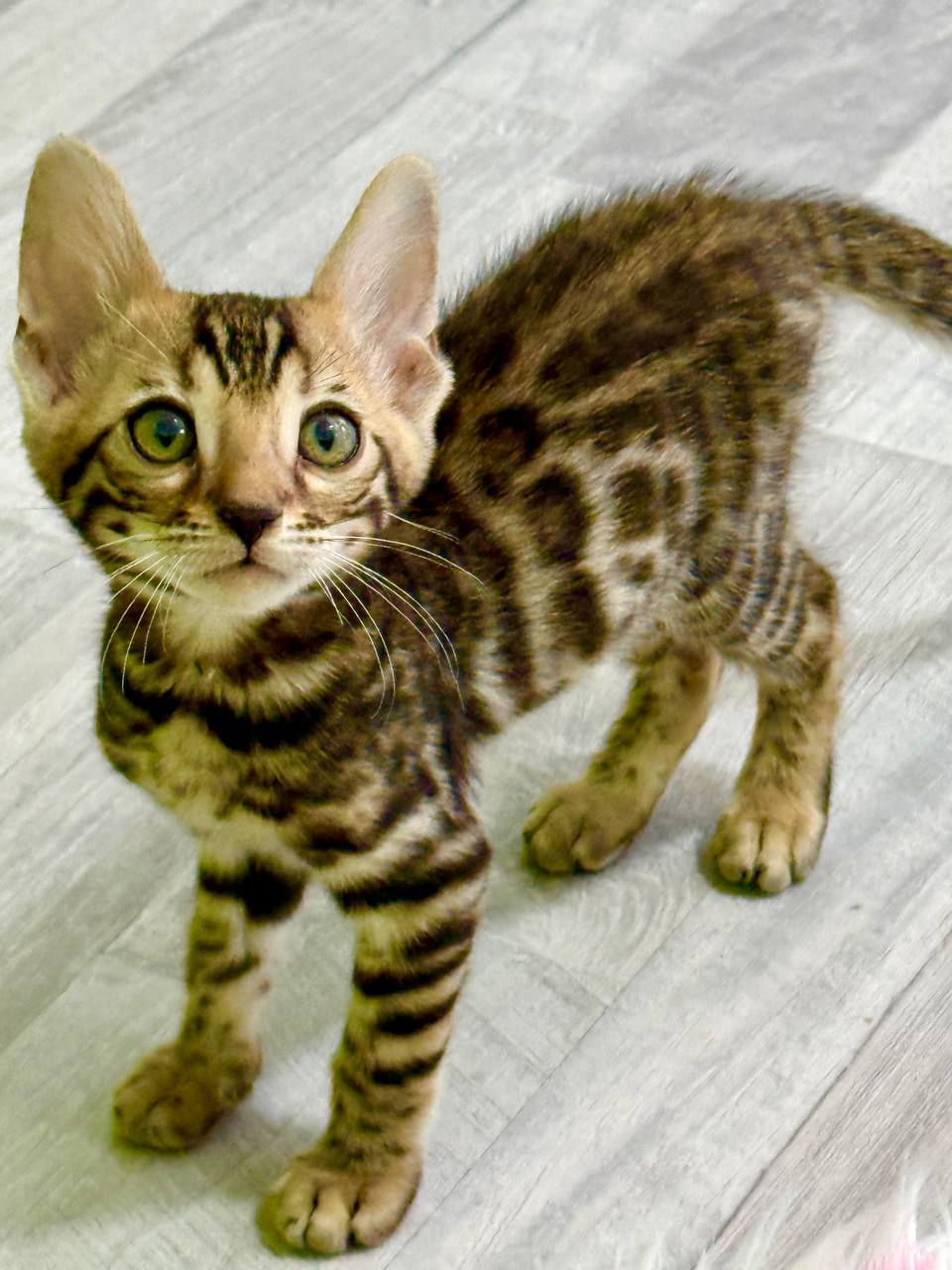
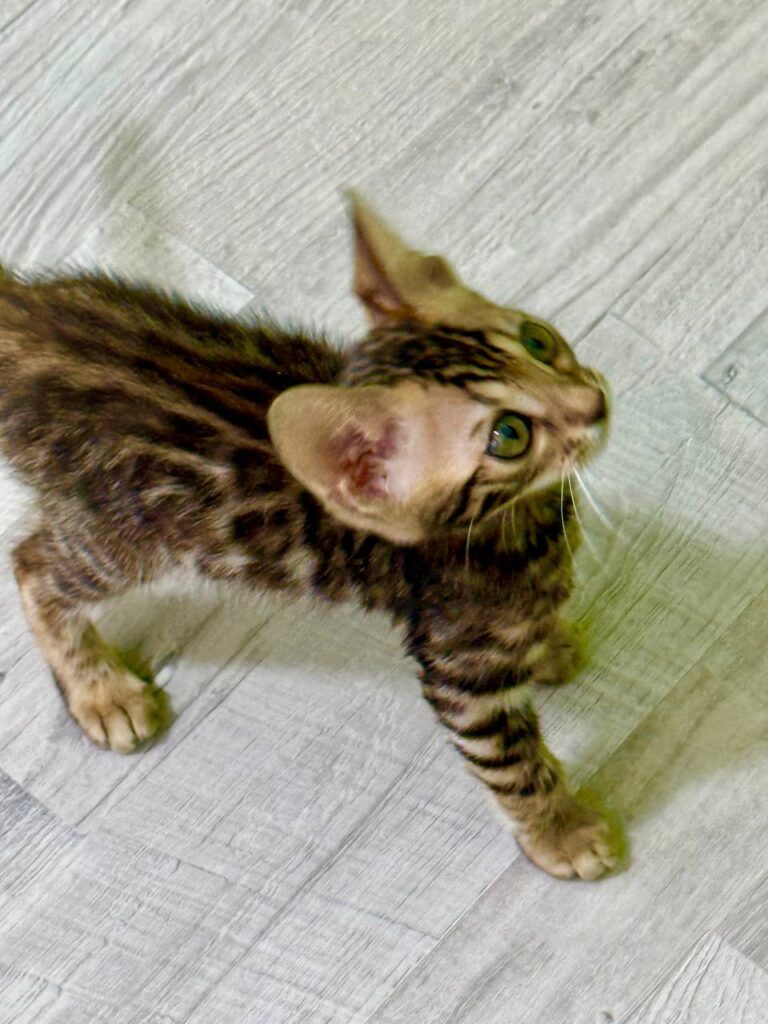
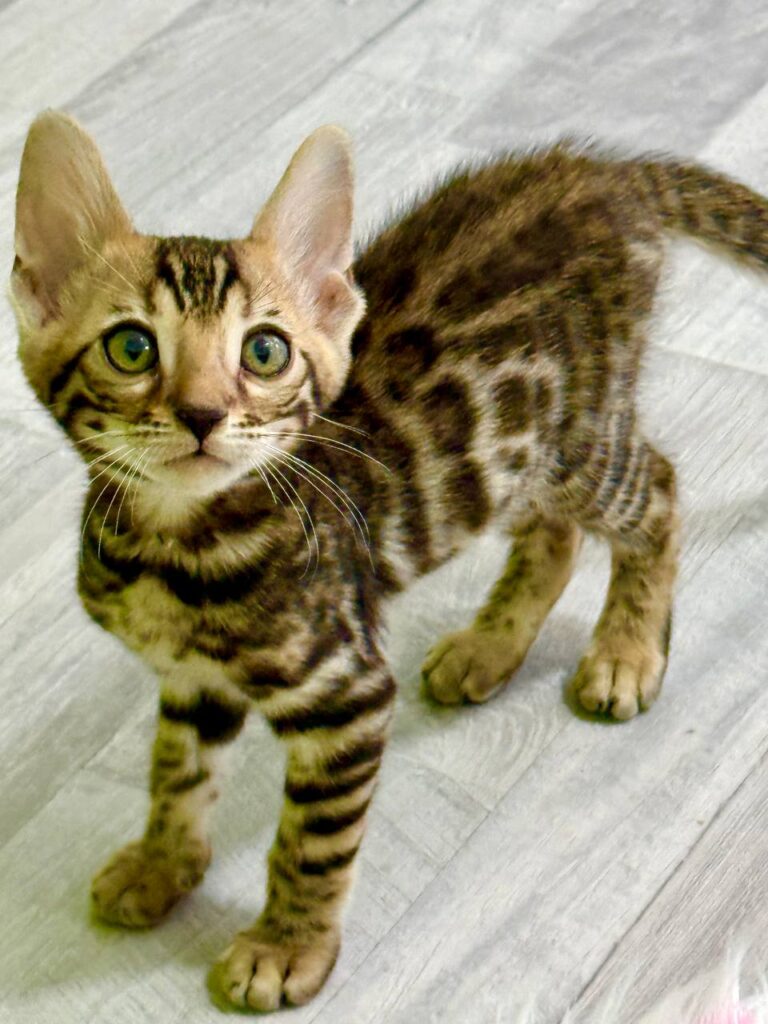
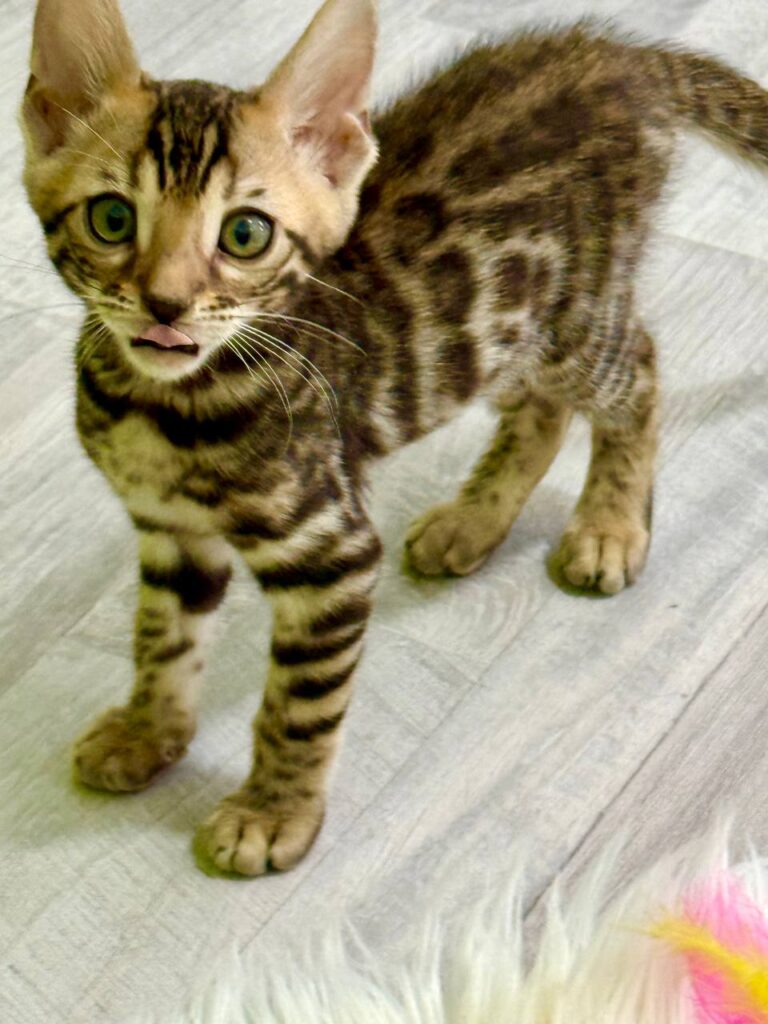
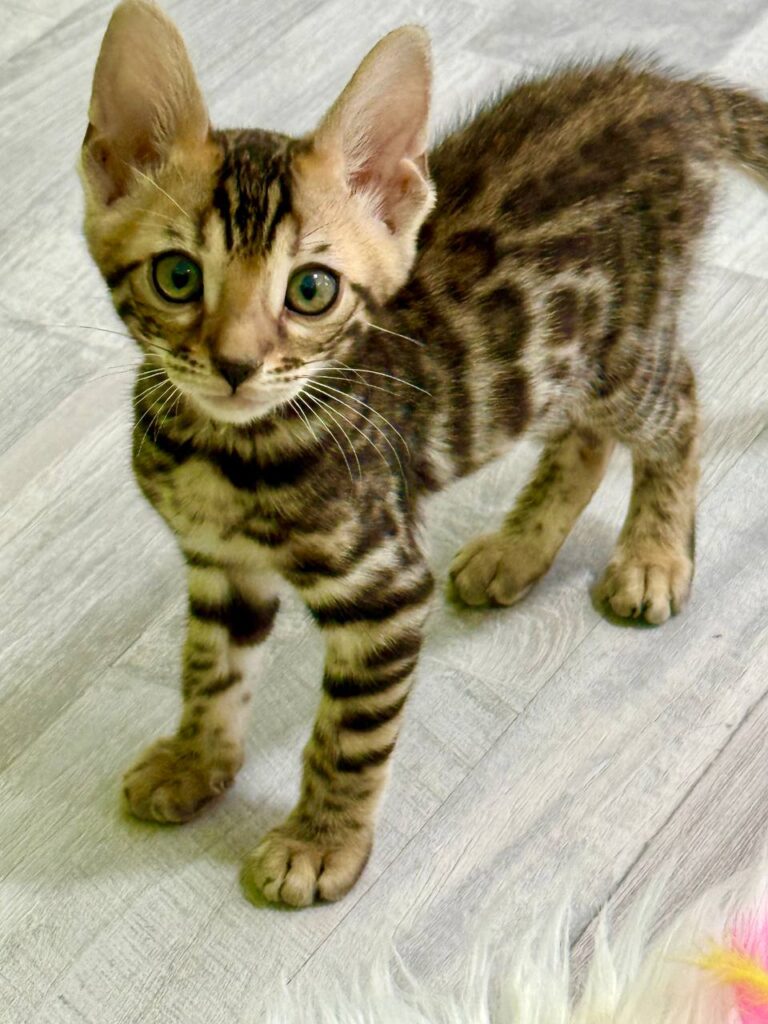
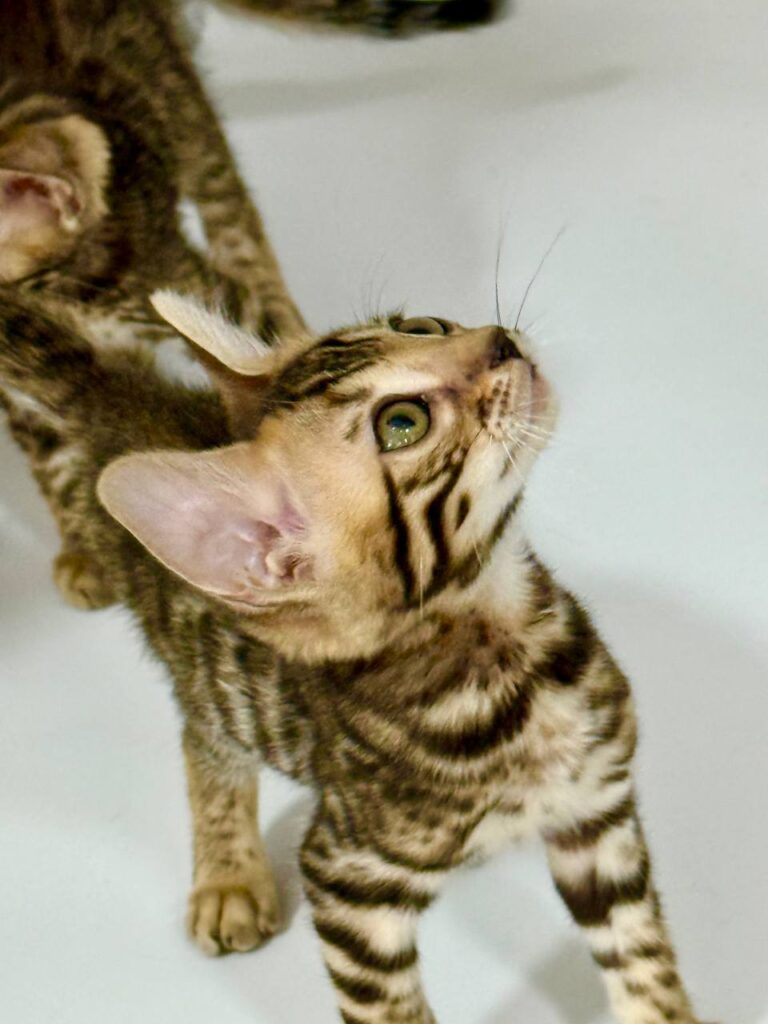
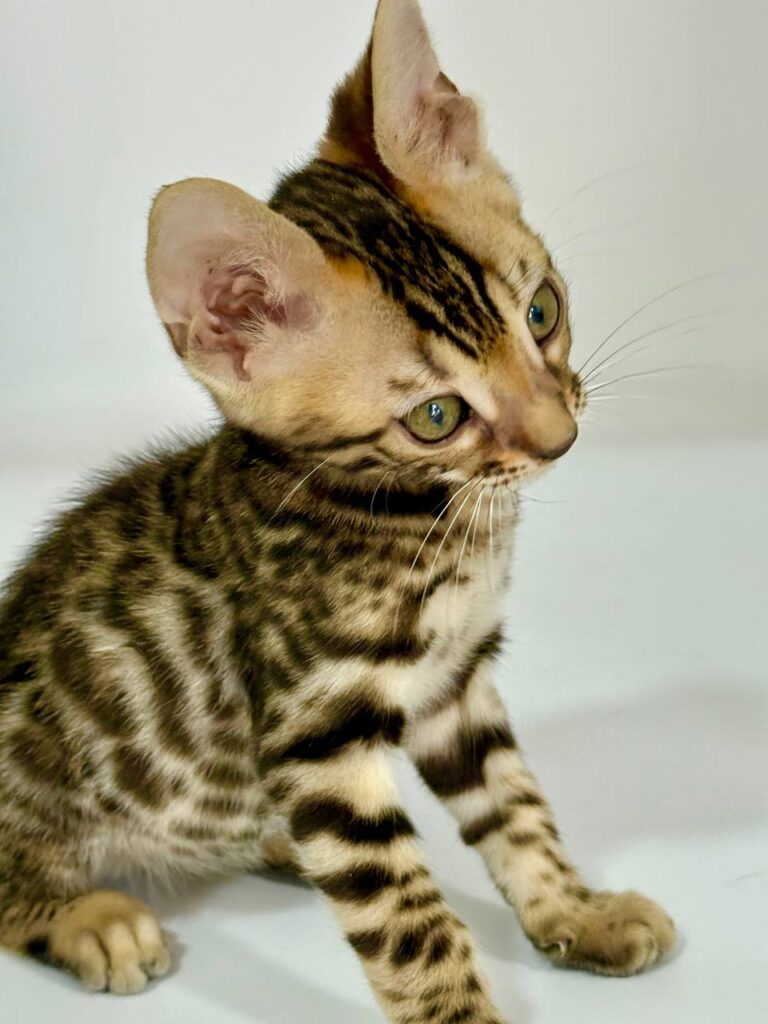
With his mesmerizing green eyes, large ears, and wild-like spotted coat, this little boy is a perfect example of a Bengal kitten. Often mistaken for a miniature leopard, the Bengal cat is a hybrid breed originally developed by crossing domestic cats with the Asian leopard cat. This combination gave rise to a stunning, athletic, and highly intelligent feline companion that has captured the hearts of cat lovers around the world. Our little guy here is already showing off the breed’s distinctive pattern, sleek build, and curious expression—traits that make Bengals truly one of a kind.
The Personality of a Bengal
Bengal cats are renowned for their high energy, playful spirit, and outgoing personalities. This isn’t your typical lazy lap cat; Bengals are explorers, climbers, and sometimes even water-lovers. From kittenhood, they tend to be incredibly active and inquisitive. The kitten in the photo already exhibits alertness and confidence, standing ready to engage with the world around him. These cats thrive on interaction and stimulation—without it, they can become bored or even mischievous. That’s why having a Bengal means being ready for lots of playtime and enrichment.
Physical Traits That Set Bengals Apart
One of the first things people notice about a Bengal is their coat. This kitten displays the iconic spotted rosette markings that resemble those of wild big cats. The coat isn’t just beautiful—it’s soft and glittery in appearance due to its short, dense fur. Their muscular body and sleek lines are complemented by strong legs and a tail that often has a black tip. Even as kittens, Bengals have an athletic grace and agility that make them excellent jumpers and climbers.
Diet and Nutrition
Proper nutrition is essential for a growing Bengal kitten. Due to their high activity levels, they require a well-balanced diet rich in protein. Many Bengal owners choose high-quality wet food or raw food diets, though premium dry food can also work if it’s rich in meat-based protein and low in fillers. This kitten will need small but frequent meals throughout the day to fuel his growth and energy. Fresh water should always be available, and some Bengals even enjoy drinking from fountains or running taps—another quirky trait!
Grooming and Hygiene
One of the perks of owning a Bengal is their low-maintenance grooming needs. Their short, tight coat doesn’t mat easily and only requires weekly brushing to remove loose hairs and keep it shiny. Bathing isn’t usually necessary unless they get into something messy, but many Bengals actually enjoy playing with water, so bath time might be more fun than you’d expect. Regular nail trimming, ear cleaning, and dental care are important for overall health, especially since this breed is so physically active and likely to put its paws (and teeth) to good use.
Environment and Enrichment
Because Bengals are highly intelligent and energetic, their environment should be enriching and stimulating. A Bengal kitten needs climbing structures like cat trees, wall shelves, and scratching posts. Puzzle feeders and interactive toys can keep their minds sharp. If you have the space and security, an enclosed outdoor catio or leash training for supervised walks can be wonderful outlets for their curiosity. Failing to provide this kind of environment can lead to destructive behavior simply because Bengals get bored easily.
Social Needs and Training
Unlike more aloof breeds, Bengals are very social and often form strong bonds with their humans. This kitten will likely grow up to be a very interactive companion who follows you around the house, chats with you in chirps and meows, and insists on being part of daily activities. Early socialization and training are important, especially because Bengals are so clever. They can learn tricks, respond to commands, and even play fetch. Positive reinforcement works best, and the earlier you start, the better they adapt to routines and rules.
Health and Veterinary Care
Generally, Bengals are a healthy breed, but like all cats, they require regular veterinary care. Vaccinations, deworming, and check-ups are vital during kittenhood to ensure proper development. Some Bengals may be prone to genetic conditions like hypertrophic cardiomyopathy (a type of heart disease) or progressive retinal atrophy, so it’s important to obtain them from reputable breeders who perform health screenings. Spaying or neutering is also recommended unless you plan to breed responsibly.
A Lifetime of Adventure
Bringing home a Bengal kitten like the one in the picture is the beginning of a dynamic, joyful adventure. This breed offers more than just good looks—they provide companionship, entertainment, and affection in abundance. Whether he’s chasing feathers, climbing to the top of a cat tower, or curling up beside you after a busy day, your Bengal boy is sure to make every moment feel lively and full of love.