A Wild Spirit in a Gentle Home
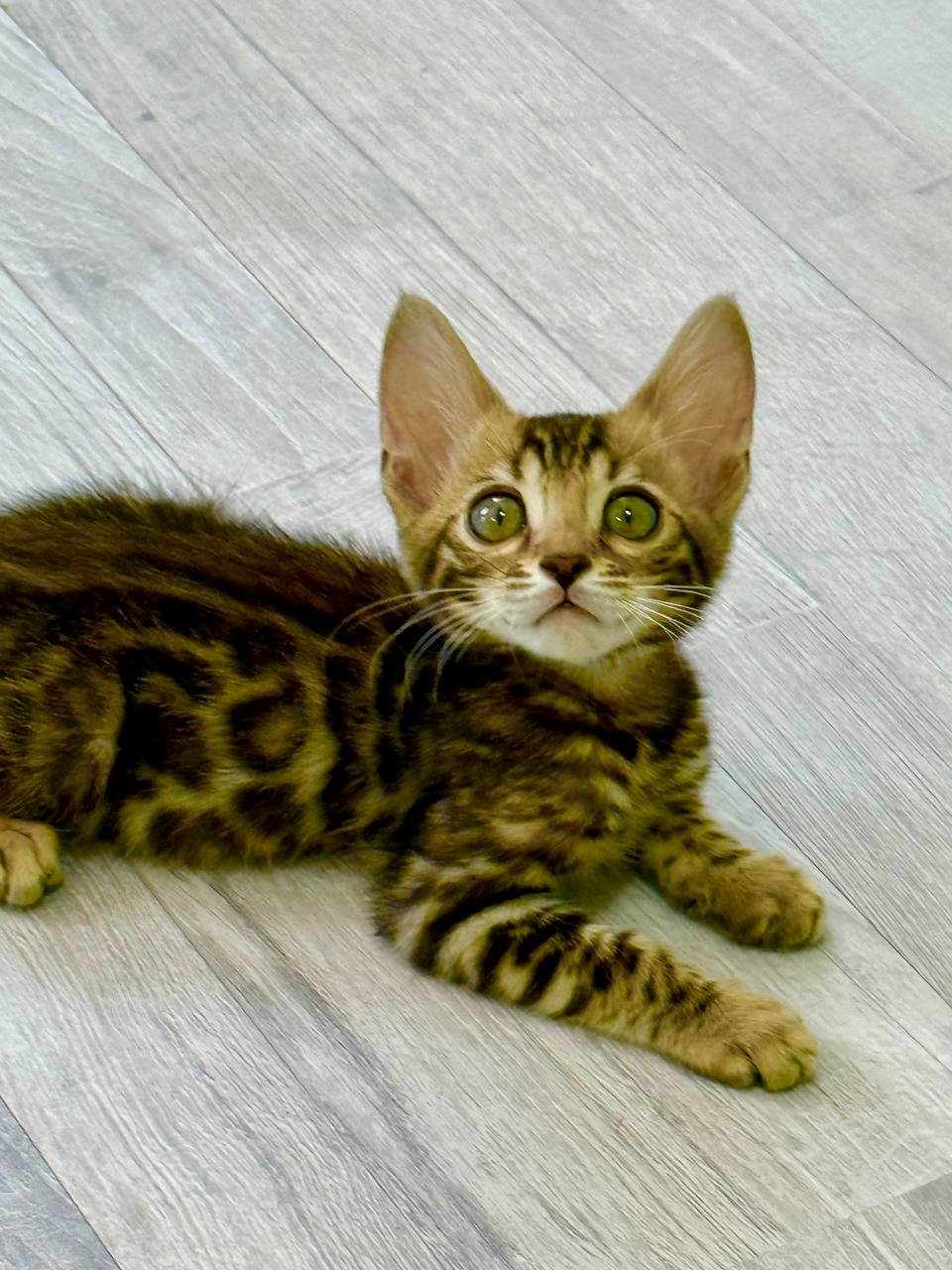
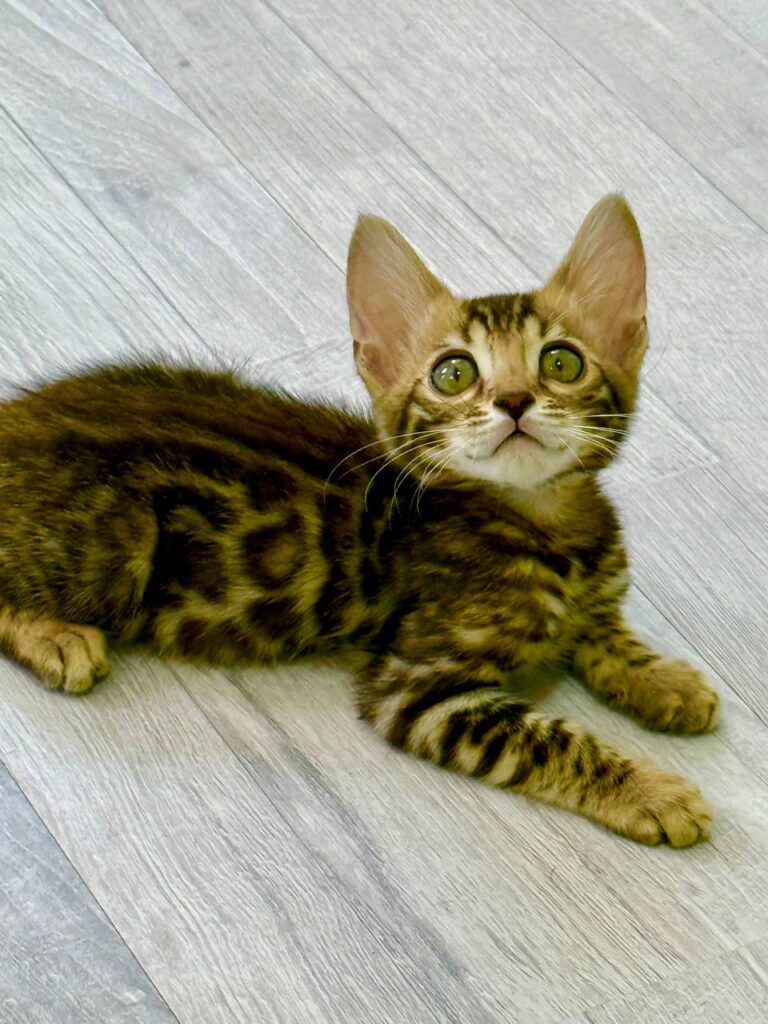
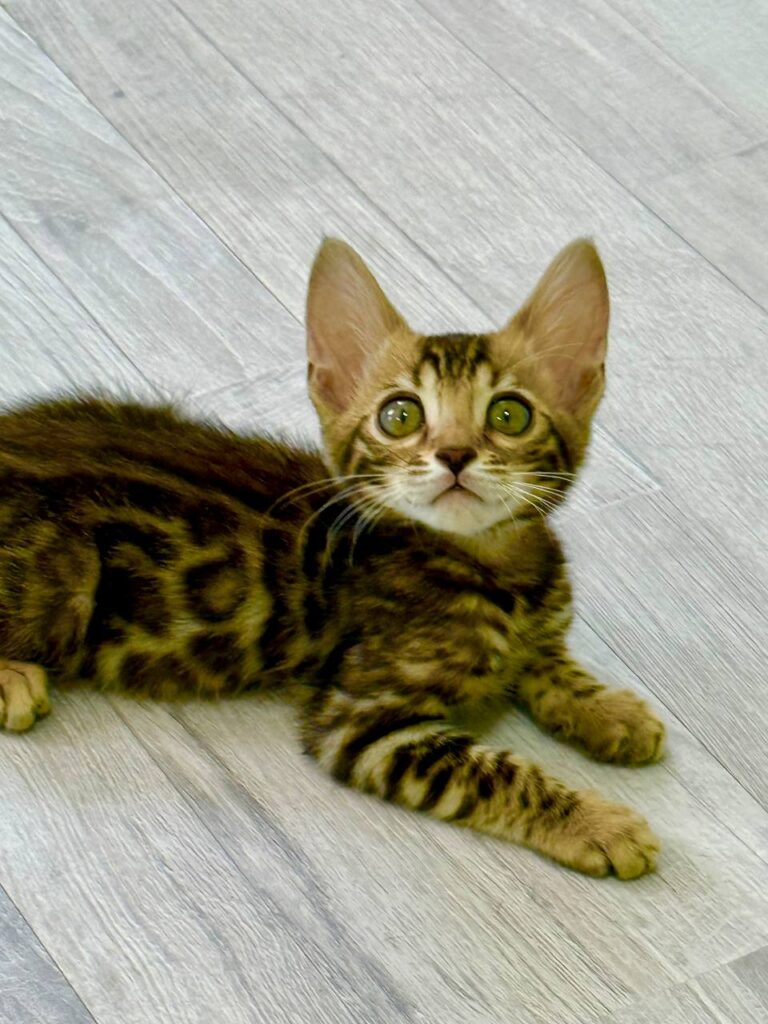
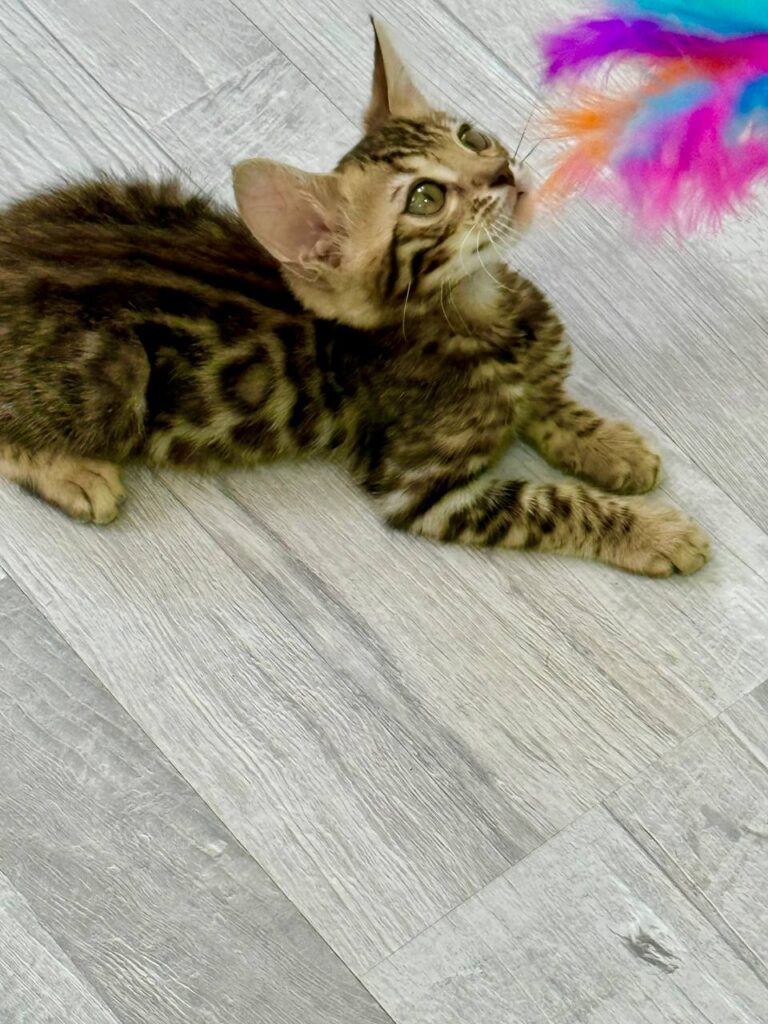
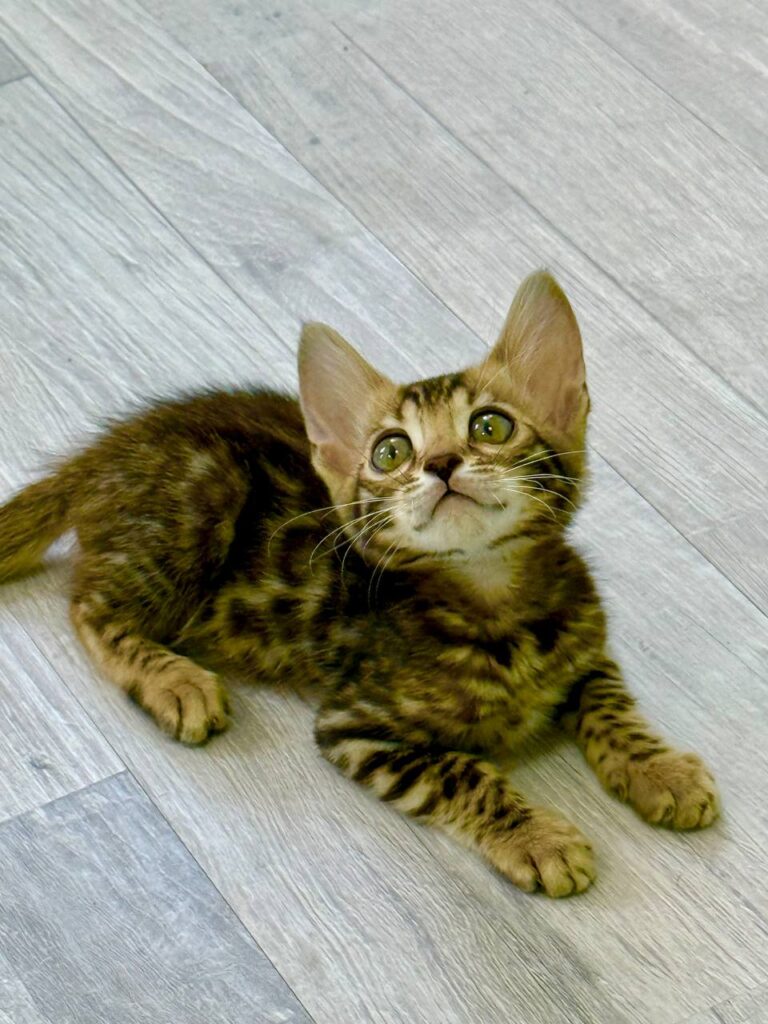
This little guy is a breathtaking example of a Bengal kitten—his glittering rosetted coat, large expressive eyes, and strong, athletic build hint at the exotic heritage of his breed. Just one look at him, and it’s easy to see why Bengals are so admired. They resemble miniature leopards, yet their personality is all domestic charm. With alert ears and a curious stare, this boy is ready to explore his world—and win hearts while doing it. Though he may be small now, he’s already brimming with energy, intelligence, and a deep-rooted sense of adventure that will only grow stronger with time.
The Exotic Origins of the Bengal
The Bengal breed was developed by crossing domestic cats with the wild Asian leopard cat, which gives them their signature spotted or marbled coats and striking wildcat appearance. But over generations of selective breeding, Bengals have become affectionate, people-loving companions with a flair for fun. Their wild ancestry still shines through in their athleticism and alertness, but make no mistake—they’re deeply loyal and often form strong bonds with their families. This boy, with his confident posture and expressive face, is a perfect example of the breed’s rare balance of beauty and companionship.
Personality and Intelligence
The Bengal is one of the most intelligent and active domestic cat breeds. This little guy is likely to be clever, mischievous, and always in motion. He’ll be the type of kitten who figures out how to open cabinets, chase laser pointers with unending enthusiasm, and even learn tricks if you teach him. These cats thrive on interaction and stimulation—he won’t be satisfied just lying around all day. Instead, he’ll need daily challenges, games, and companionship to stay content. He’ll probably even “talk” to you with a wide range of meows, chirps, and purrs, making him a very vocal communicator.
Growth and Physical Characteristics
As he grows, this Bengal boy will develop into a muscular and agile cat with long legs, a strong build, and exceptional coordination. His coat will remain sleek, dense, and low-shedding, but the markings will continue to darken and define as he matures. One of the most dazzling features of many Bengals is their “glitter” coat, which looks like it’s been dusted with gold in sunlight—a trait that’s already visible in his photo. He’ll likely remain medium to large in size and will move with the grace and power of a jungle cat.
Nutrition and Feeding Needs
To keep up with his high energy levels, this young Bengal will need a nutrient-rich diet. A quality kitten food that’s high in protein and low in unnecessary fillers is ideal during his growth stage. He burns more calories than most cat breeds due to his active lifestyle, so feeding him small, frequent meals or using an automatic feeder can help maintain his energy and weight. As he matures, you can transition to an adult formula that supports muscle tone and keeps his coat healthy. Fresh water should always be available—some Bengals even enjoy drinking from cat fountains!
Grooming and Maintenance
One of the perks of owning a Bengal is their low-maintenance coat. His short, silky fur doesn’t require extensive grooming, though a weekly brushing will help remove loose hairs and keep the coat shiny. He’ll likely enjoy the bonding time, especially if introduced to grooming early. Since Bengals are known for their cleanliness, he’ll do a great job keeping himself tidy. Aside from grooming, regular claw trimming, ear cleaning, and dental hygiene should be part of his routine care to ensure overall health.
Enrichment and Play
This Bengal kitten will thrive in an environment that’s rich in stimulation. Climbing trees, scratching posts, tunnels, and plenty of toys are essential. He’s not just playful—he’s athletic, which means vertical space like cat shelves or towers will help him express his natural behaviors. He’ll love interactive games with feather wands, ball tracks, or even puzzle feeders that challenge his mind. He may also enjoy walking on a harness or leash, which is surprisingly common for this breed. Without daily activity, he can become bored and even destructive, so structured play is just as important as food or sleep.
Health and Lifespan
Generally, Bengals are a healthy breed, especially when bred responsibly. However, they can be prone to specific conditions such as hypertrophic cardiomyopathy (HCM), progressive retinal atrophy (PRA), and gastrointestinal sensitivities. Regular vet visits, proper vaccination, and parasite prevention are crucial to keeping him healthy. With good care, a Bengal cat can live between 12 and 16 years, sometimes even longer. Keeping his stress levels low and providing him with enough physical and mental outlets will greatly contribute to his long-term well-being.
A Wild Heart with a Gentle Soul
Behind those wide, curious eyes is a kitten full of love, intelligence, and instinct. While his markings are wild and his body built for action, this Bengal boy is still a sweet and affectionate companion who will form a deep bond with those who invest in him. He’ll bring energy, laughter, and elegance into your life in equal measure. With proper care, enrichment, and affection, he’ll grow into a confident adult cat who never loses his sense of play, his loyalty, or his wild-hearted spark.